A Cosmogram of Holy Views
Ab-Anbar Gallery, London 2025
A Cosmogram of Holy Views confronts the dissonance between the Holy Land as a mythical place in the western imaginary and the sacred architectures and geography of Palestine on the ground. “The Holy Land” is both revered in abstraction and obliterated in practice. Churches, relics, and imagined landscapes of Palestine are venerated, looted, and copied while the living communities and architectures that hold them are systematically displaced and destroyed by the same agents that revere them from a distance.
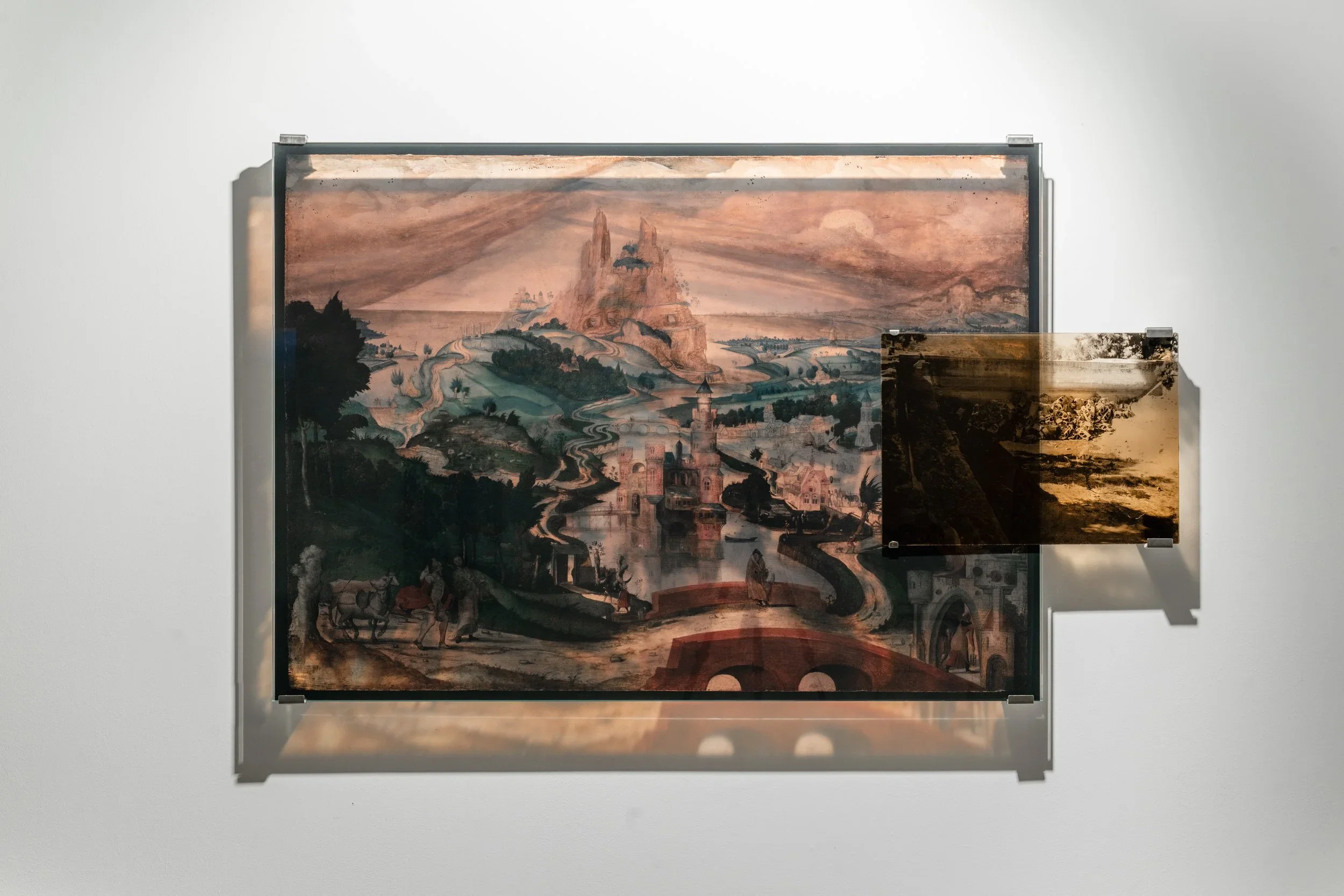
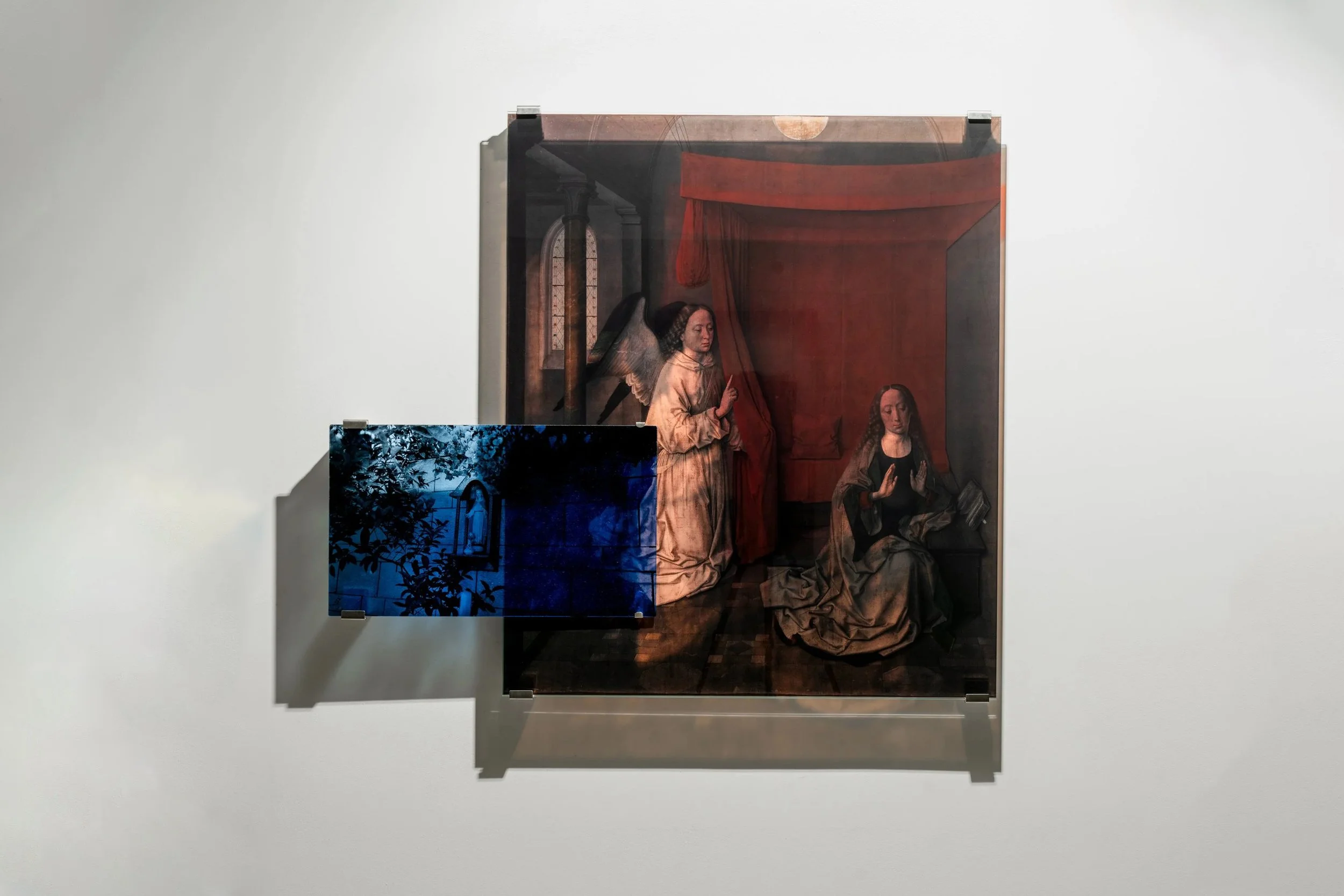
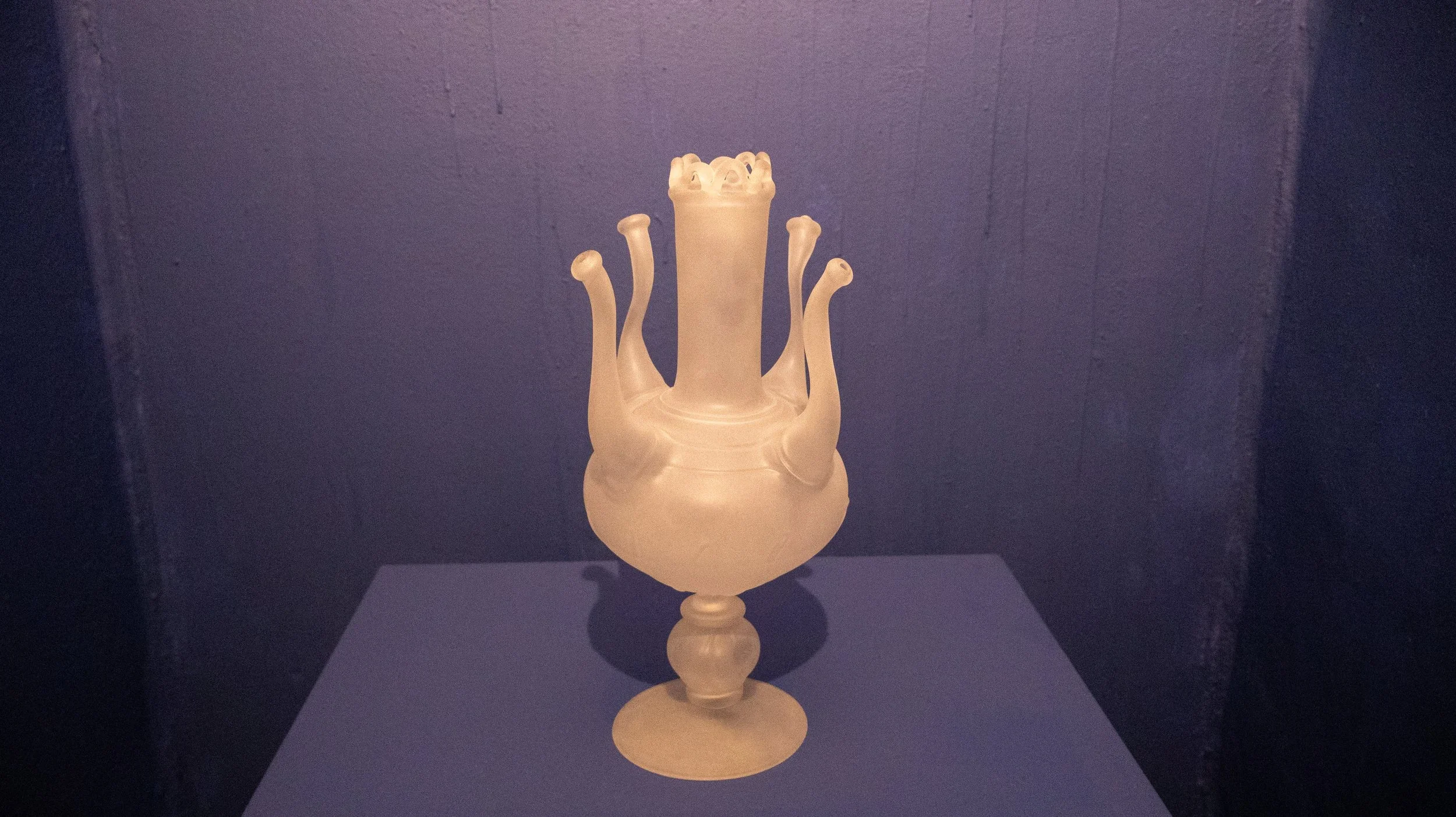
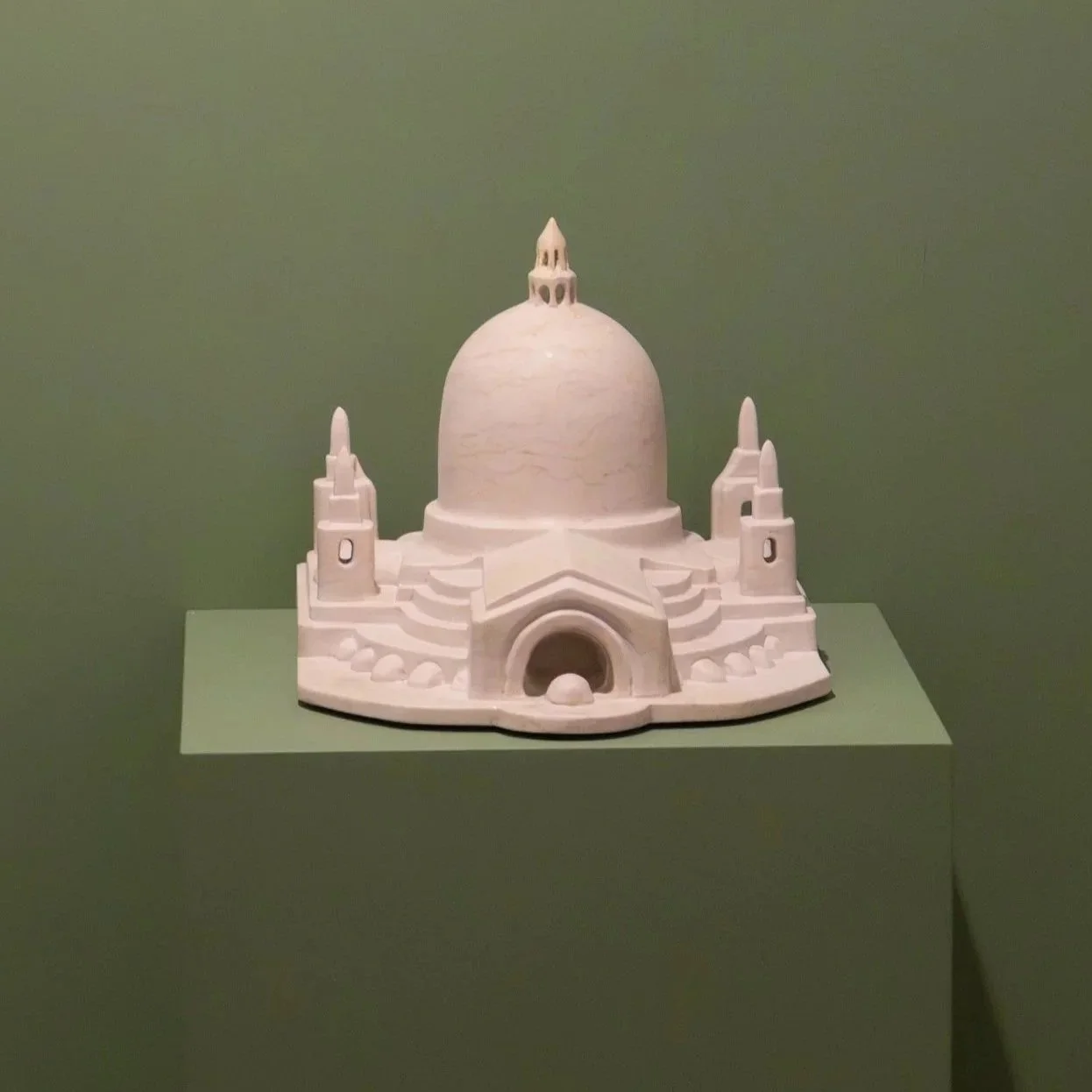
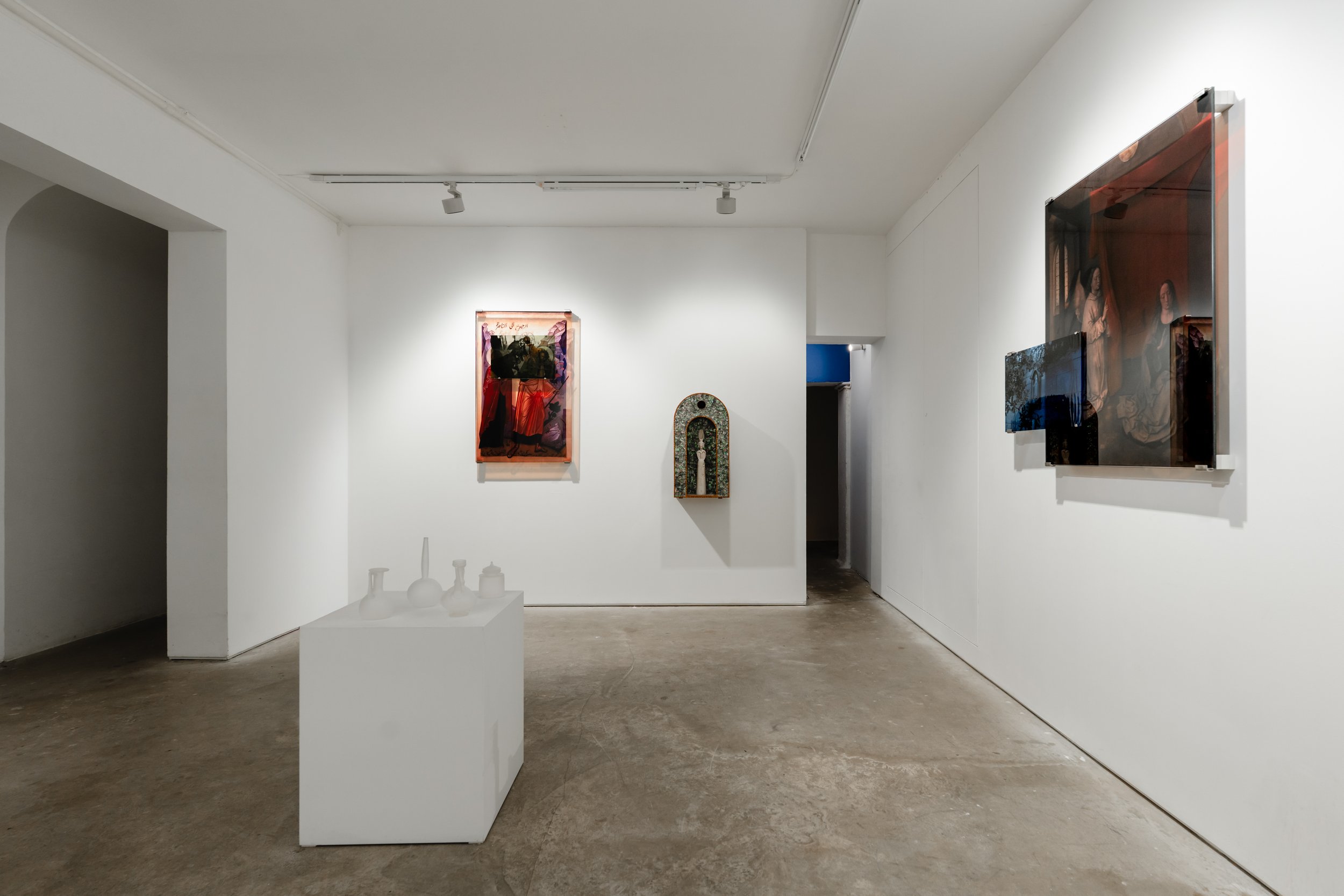
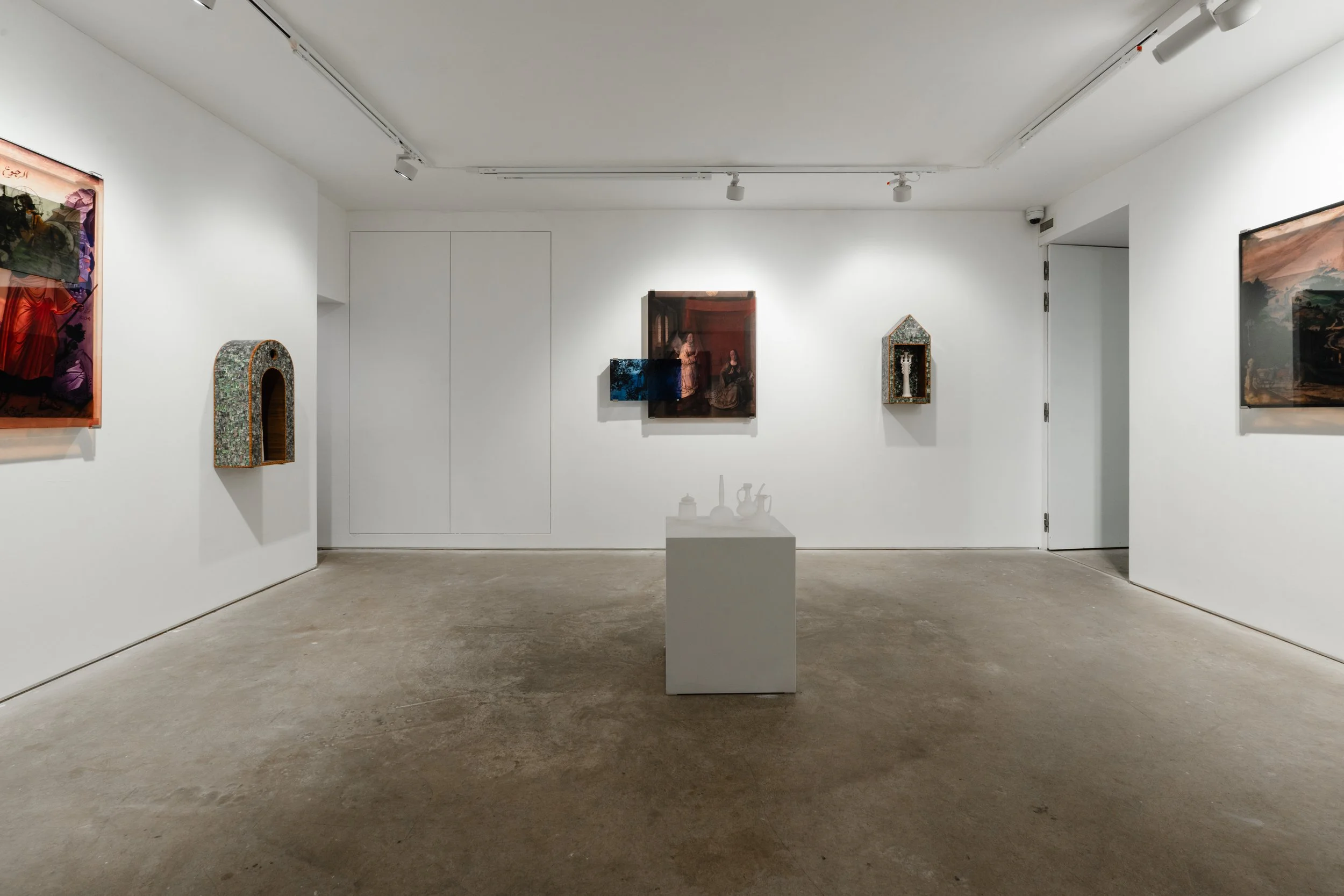
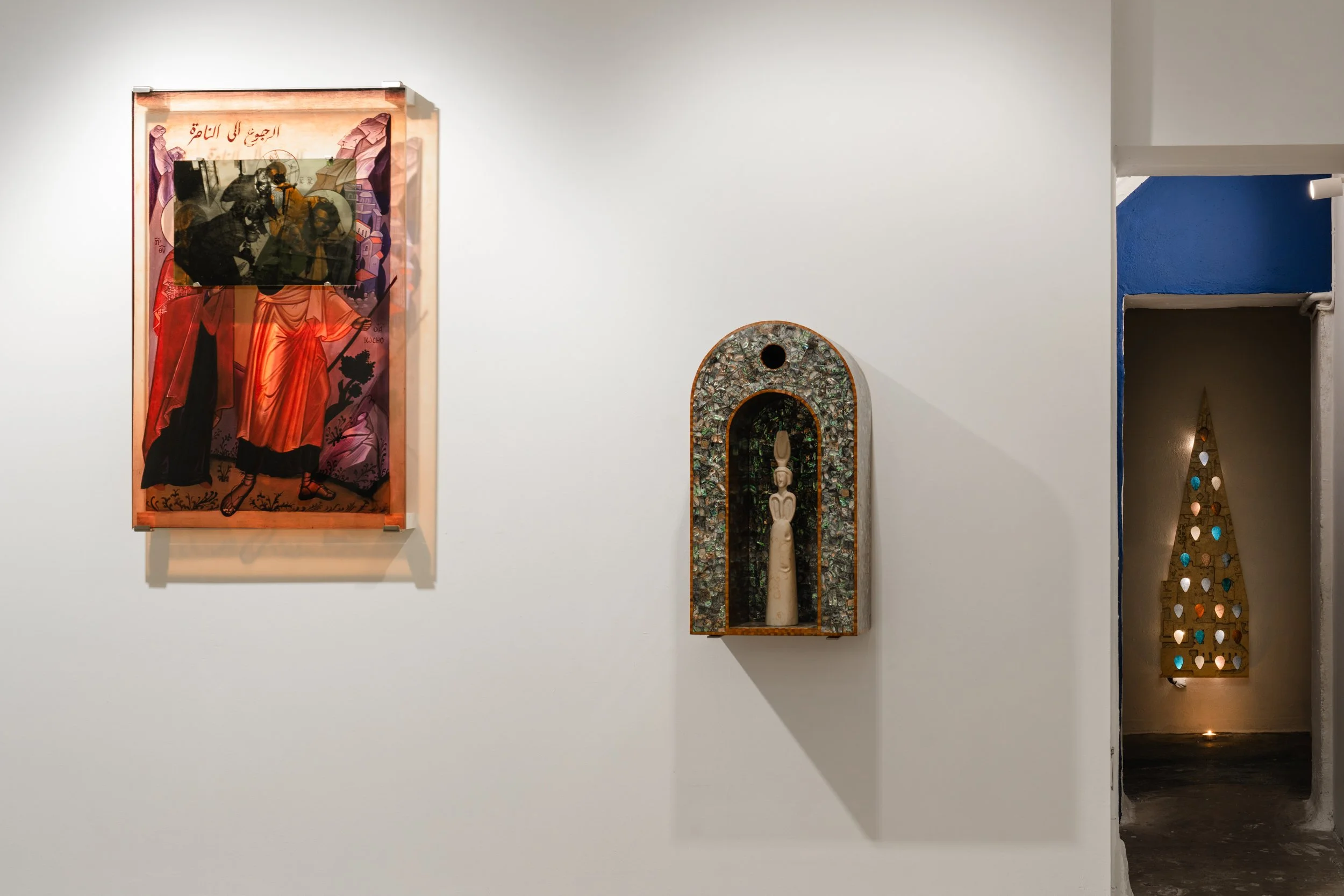
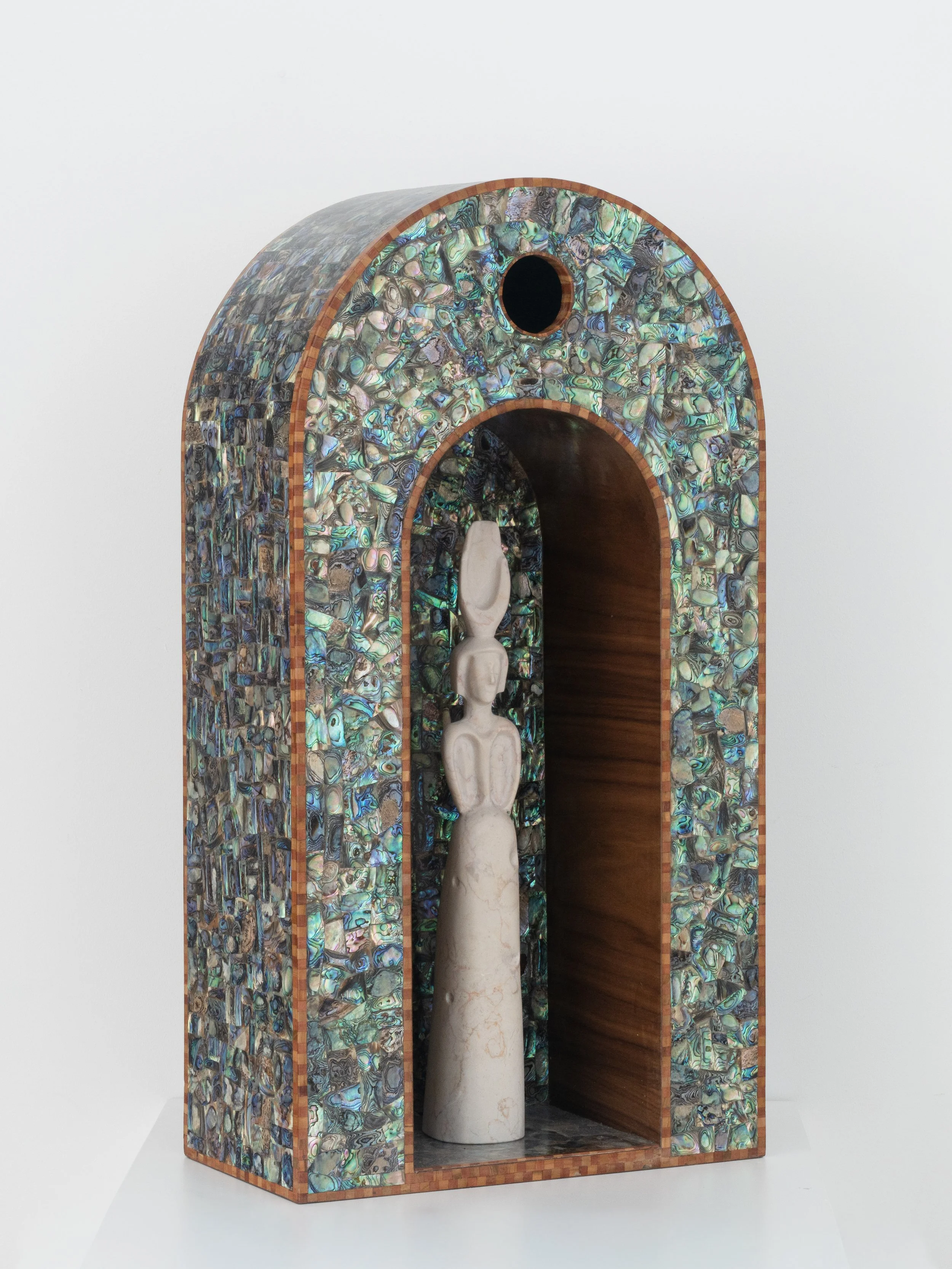
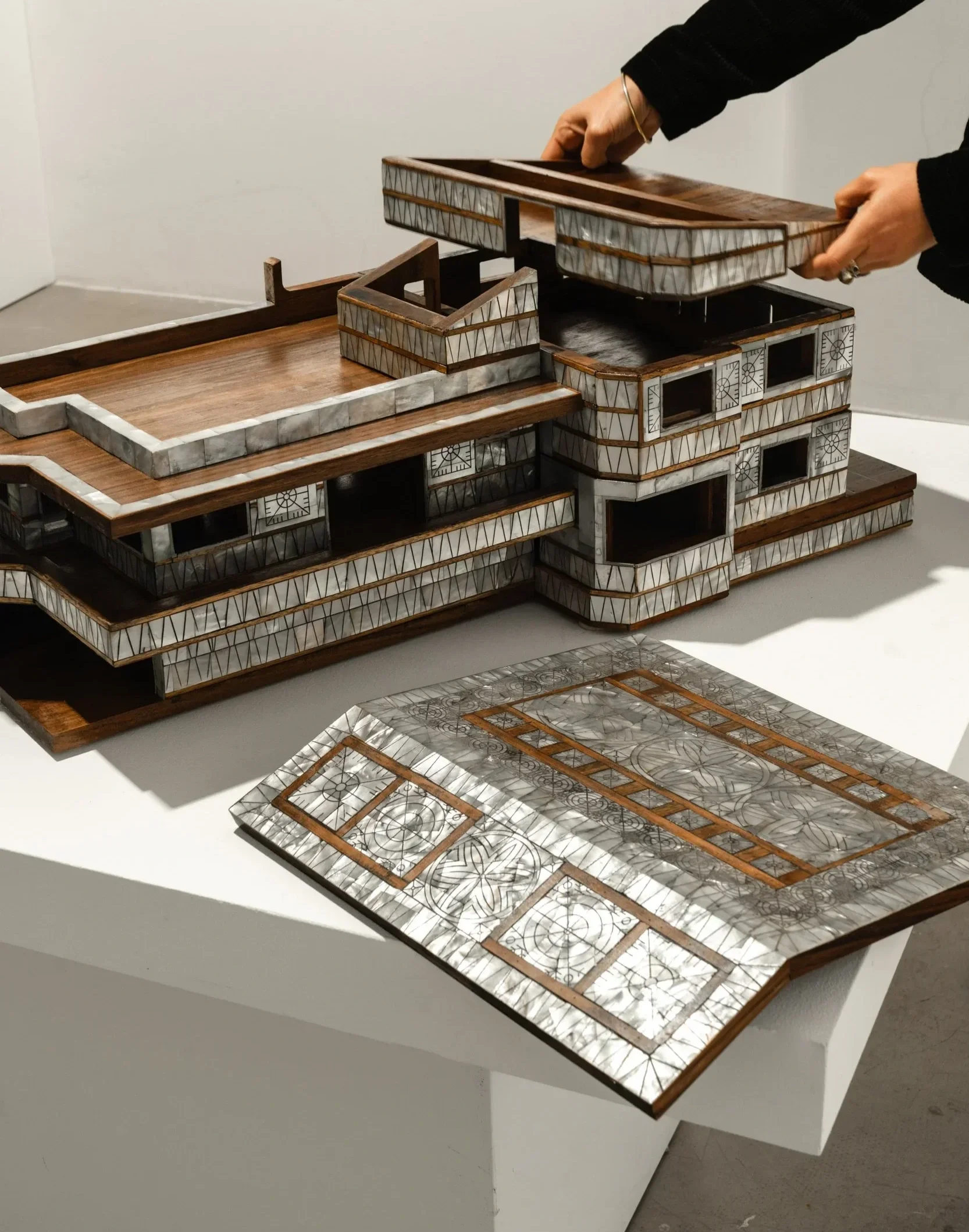
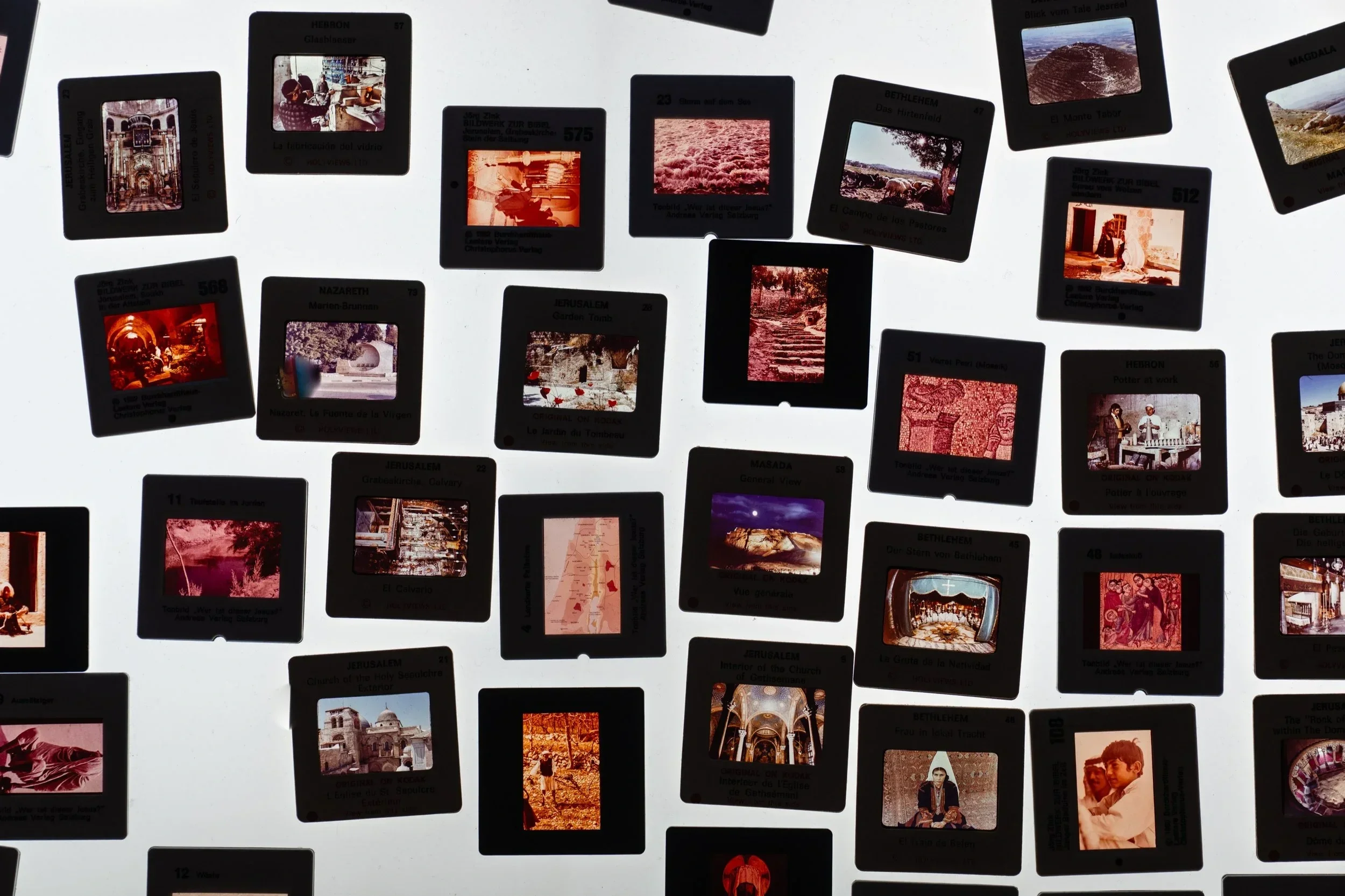
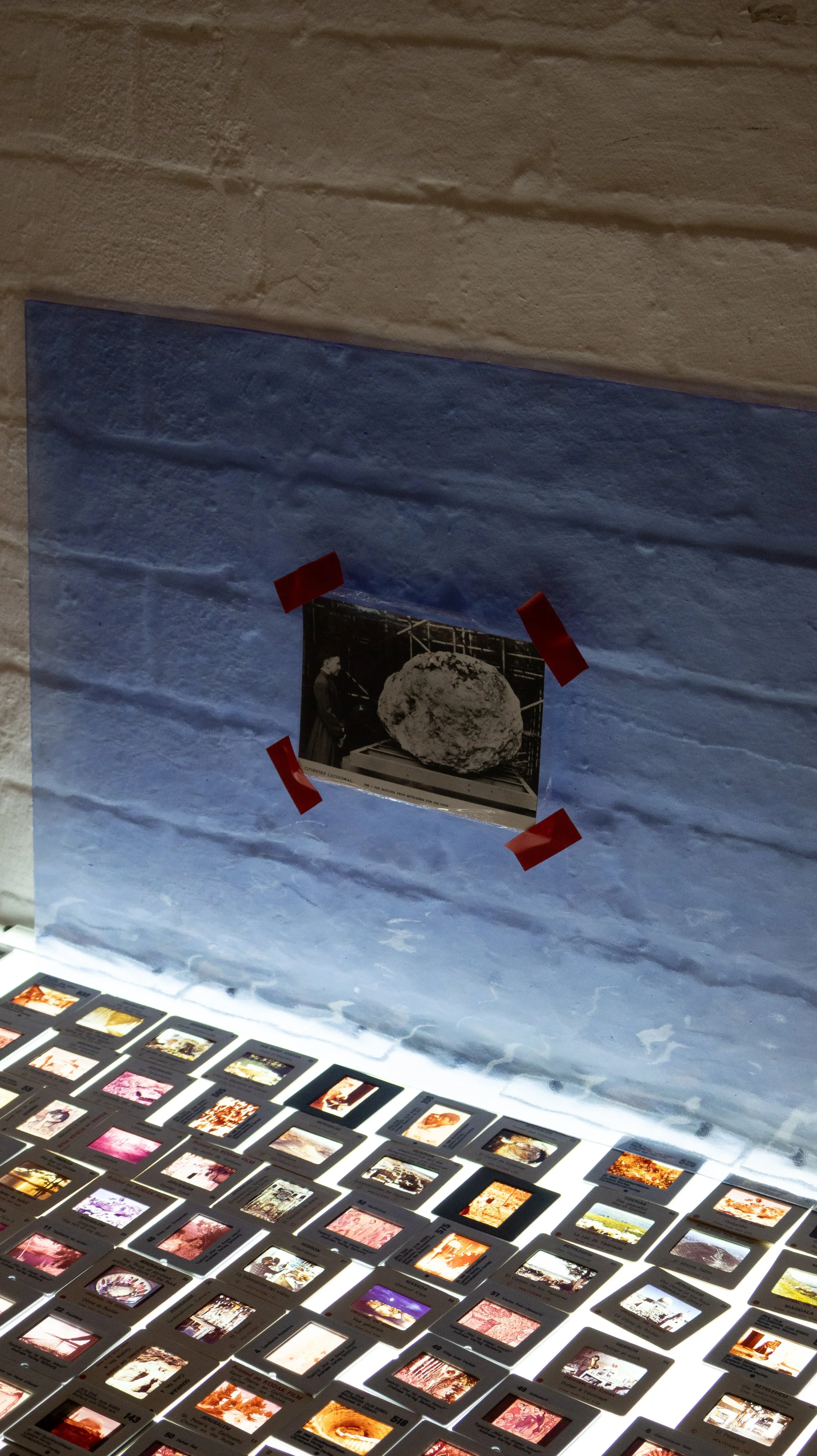
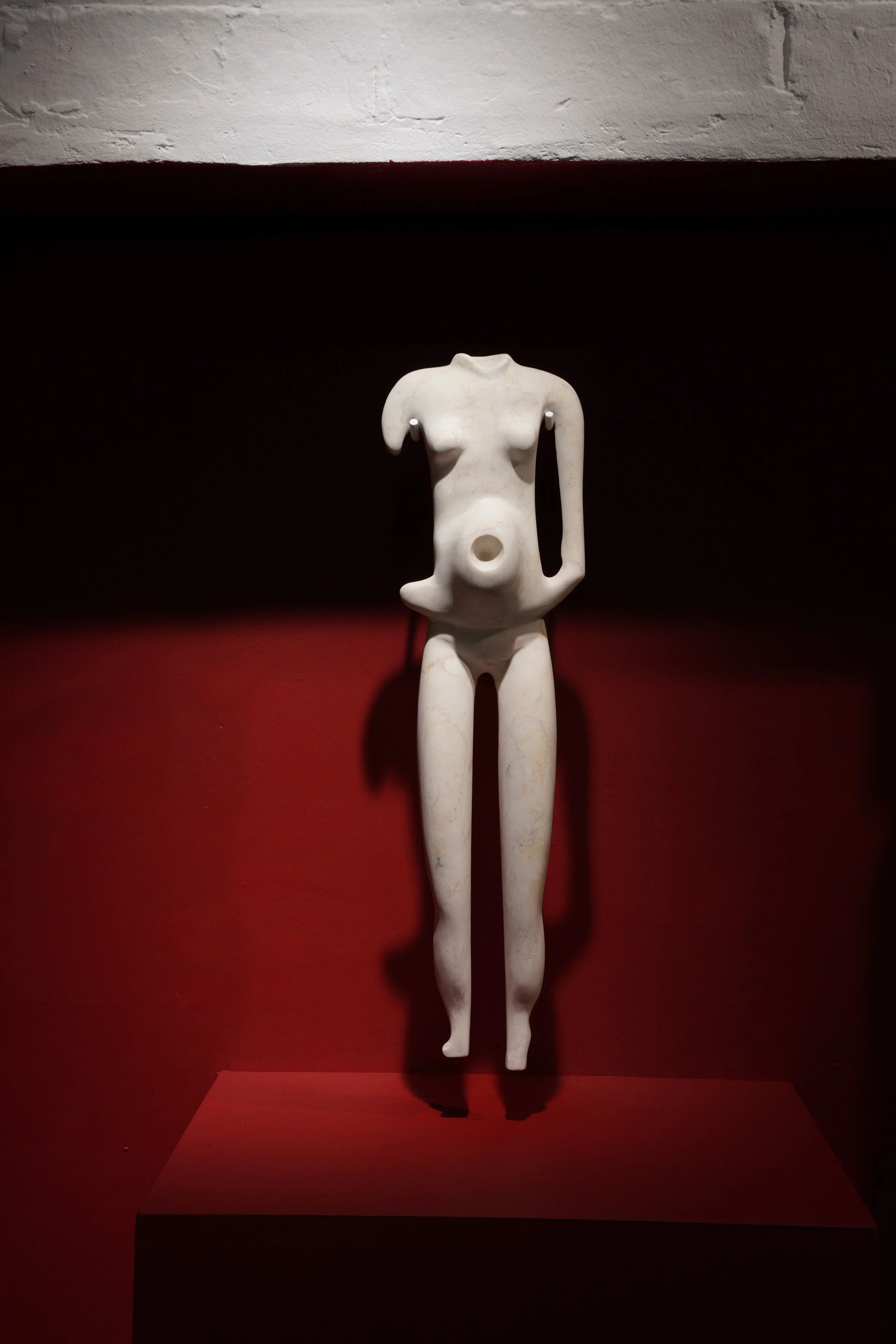
The exhibition unfolds a triptych across three spaces: the body, the spirit, and the land. Each installation reclaims fragments of personal and collective histories - material, architectural, and emotional - through transformed sculptures, reconstructions, and rituals. Wax relics of dismembered body parts become votive offerings, stone carved church windows with colored glass inlays as portals to the world of the martyrs, mother of pearl shrines for our artefacts, and an architectural model of my grandparents’ house as a sacred site, and glass and stone sculptures combine the spiritual and material makeup of the land. Finally, glass collages contrast personal archives and sacred moments in Palestine with western illustrations of the holy land.
Together, these works form a cosmogram: a re-presentation and reorientation of what “Holy” means to Palestinians today: where the sacred is not abstracted from land, body, and history, but embedded within them.

Phantom Votives
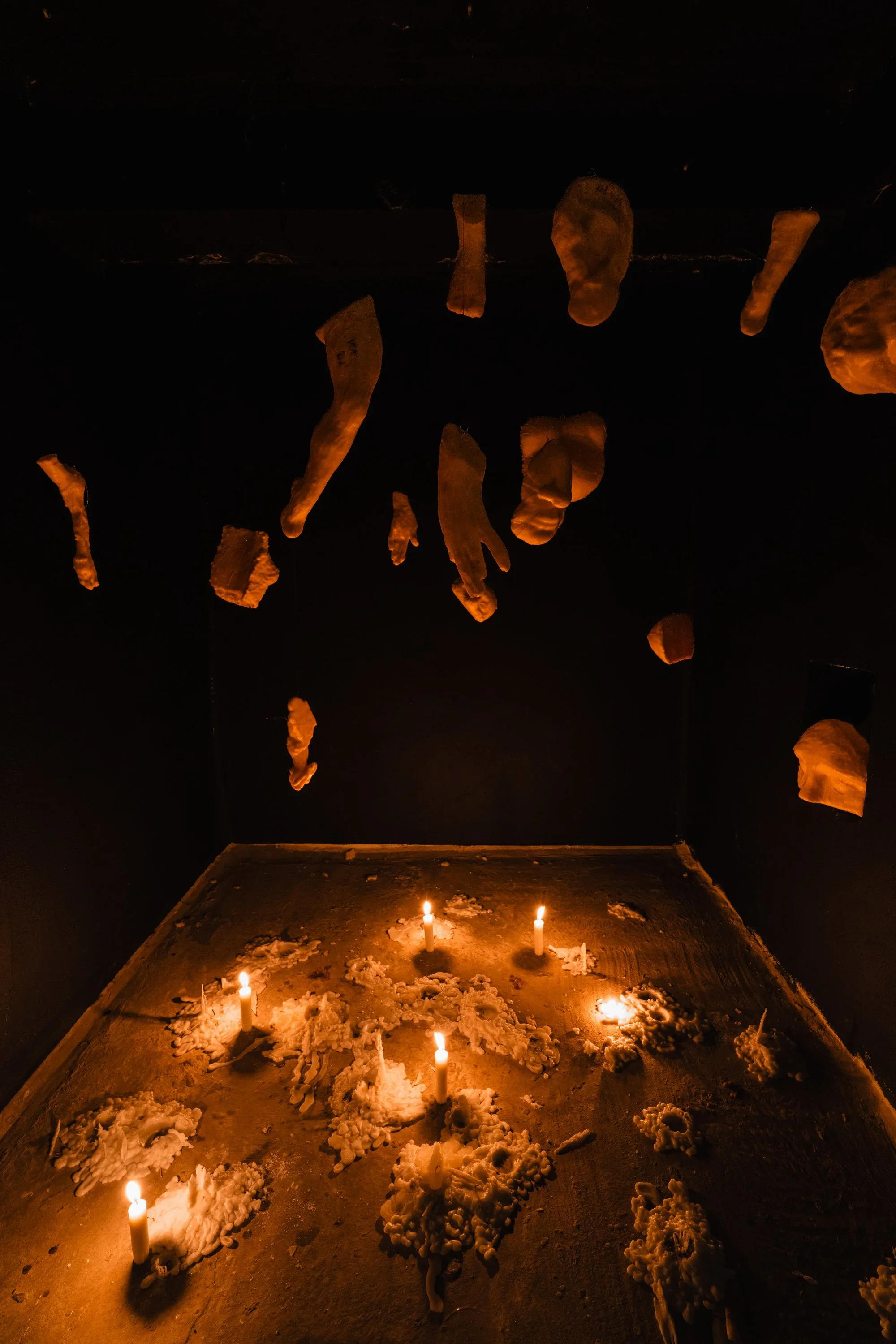
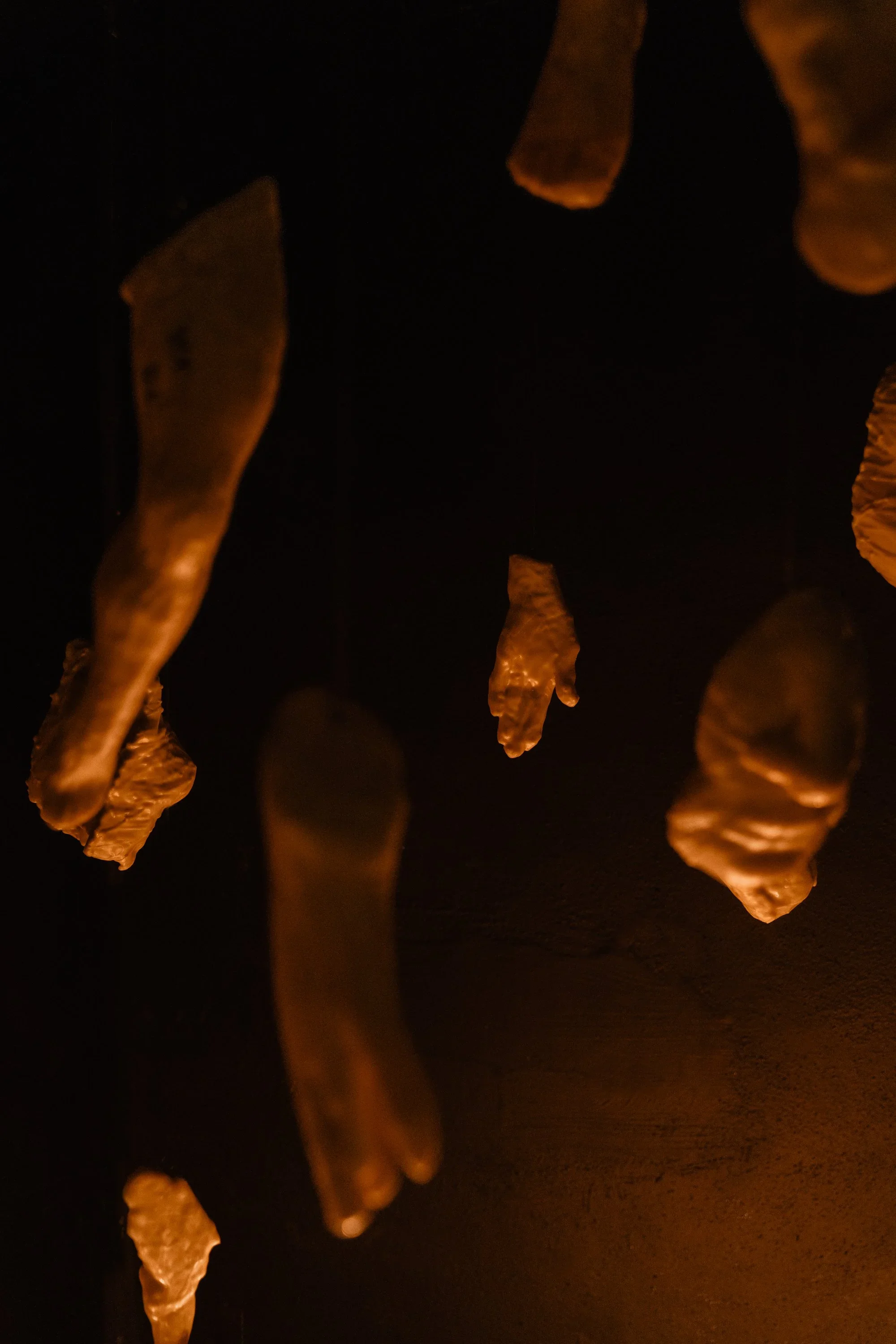
Phantom Votives transforms the first chapel-like space into a site of quiet invocation. Beeswax casts of dismembered body parts marked with the day since the beginning of the genocide they were carved, fragments of hands, feet, and torsos, hang delicately from the ceiling, their surfaces glistening in the candlelight that flickers from below. The air carries the faint scent of wax and smoke, evoking the intimacy of ritual and the weight of remembrance.
These votive fragments hover between offering and apparition. They recall ancient gestures of devotion and healing while mourning the dismemberment of bodies in Gaza today. Suspended in darkness, they form a constellation of loss and persistence, where each fragment becomes both a wound and a prayer.
The space invites visitors to linger, to mourn, to dream, to conjure a spiritual geography that binds the material and the spectral, the sacred and the broken, into fragile forms of collective memory.
Model of a Sacred Home
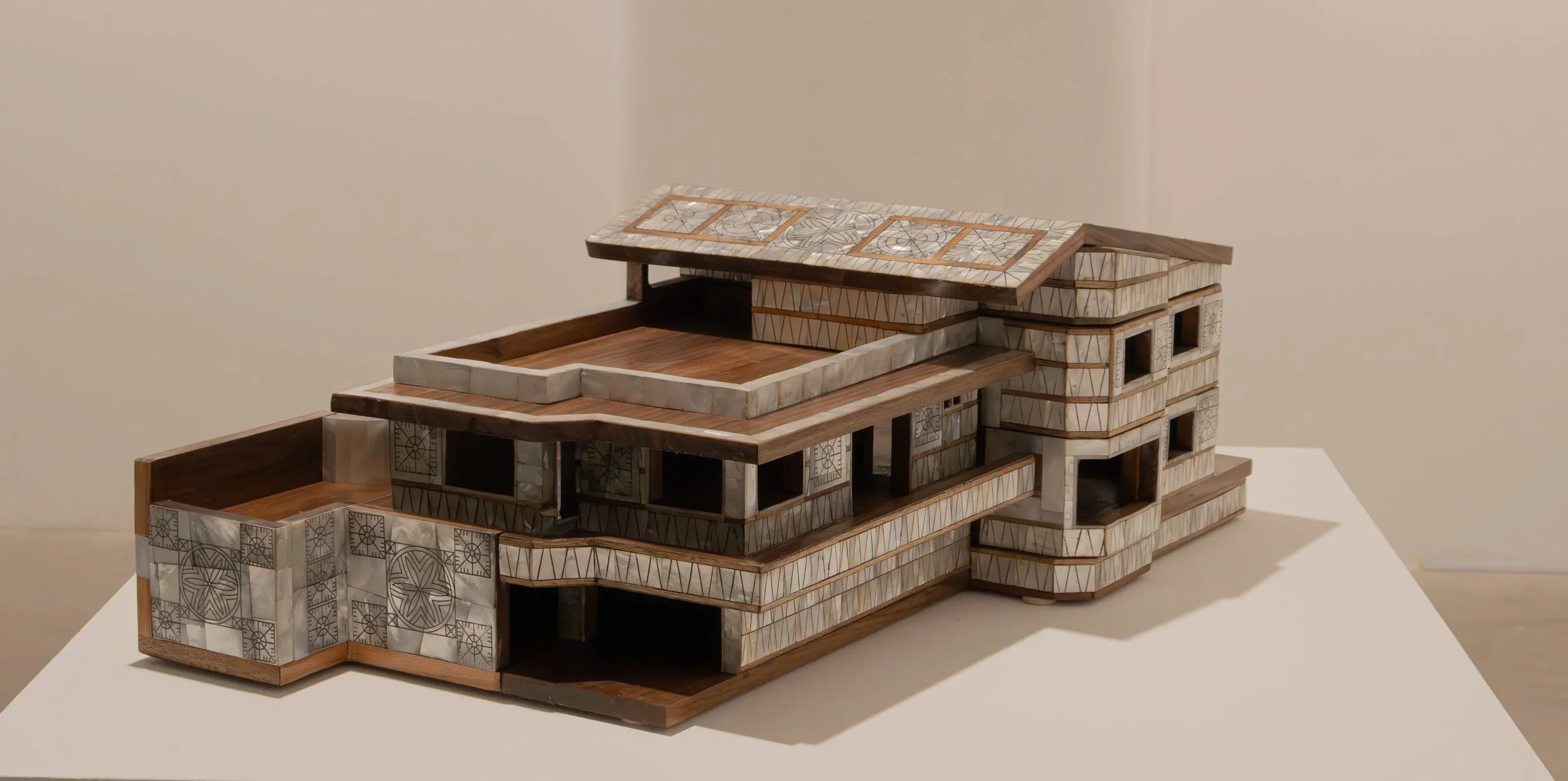
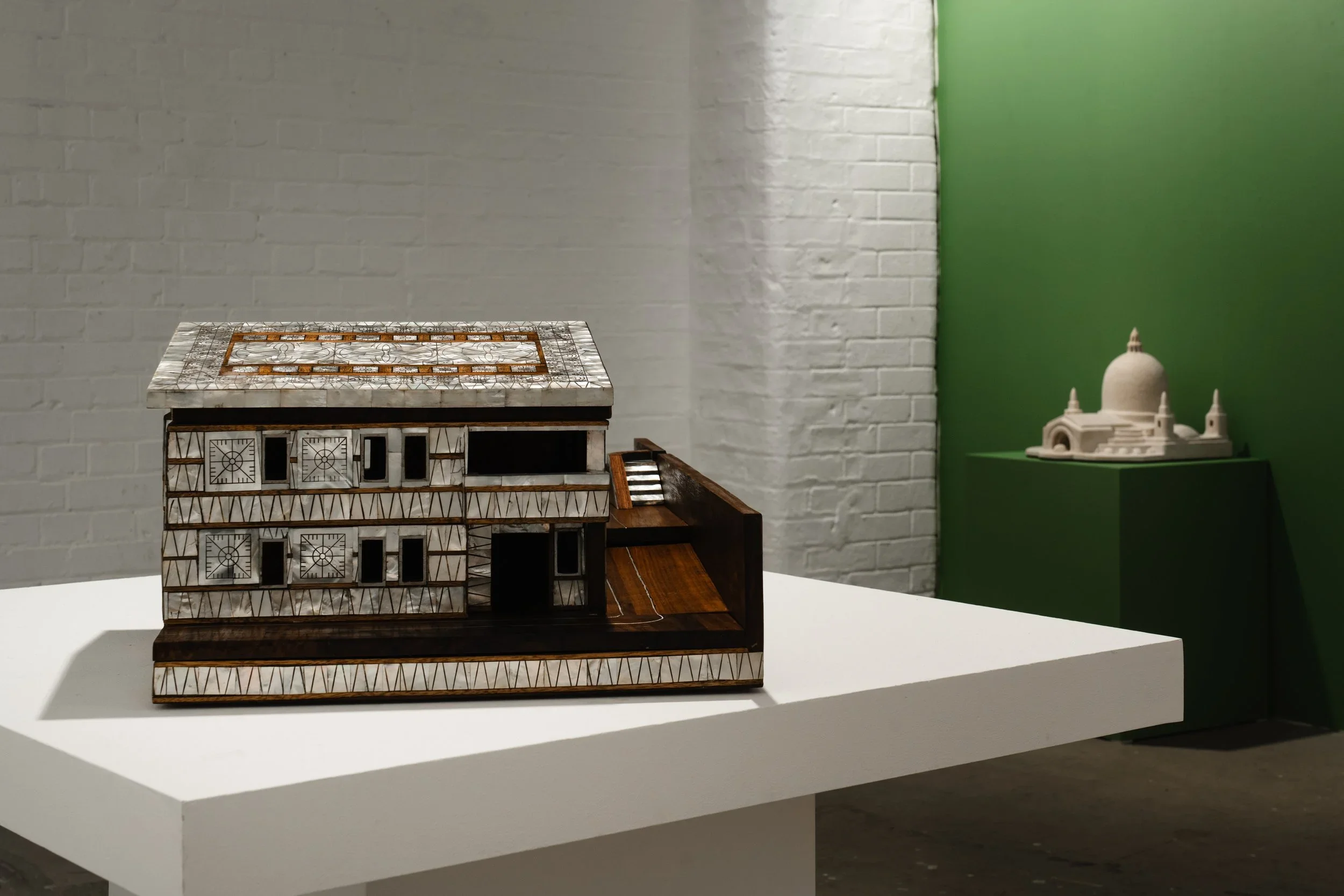
Mother of pearl inlay of Dima’s grandparents home in Nazareth. Modeled in the same way the Church of Nativity and the Church of the Holy Sepulchre were modeled by artisans in Bethlehem. This gesture turns the question of the holy land on its head by painting a middle class home in Nazareth as the sacred instead.
Sacred Dissonance
Sacred Dissonance is a series of glass collages that confront the fractured perceptions of the Holy Land, the tension between how it is mythologized in the West and how it is lived, destroyed, and remembered by those to whom it belongs. In this work, the body becomes both architectural and territorial: the body of the land, the body of the people, fragmented and contested.
Each collage overlays Western paintings of the Holy Land, images that, while often beautiful, romanticize and erase indigenous presence, with moments, spaces, and memories drawn from personal history. The chosen sites, Nazareth, Jerusalem, and Bethlehem, are considered sacred not through imposed mythologies but through lived experience: the intimacy of memory, the inheritance of loss, and the persistence of belonging.
These works unsettle the image of Palestine as a distant abstraction, exposing the contradictions between the Western imaginary and the realities of Palestinian life. The sacred, here, is not fixed in relics or ruins but embedded in daily gestures, fragile spaces, and enduring bodies that refuse erasure. Foregrounded among these images are scenes of domestic life forced upon freedom fighters sheltering in the Church of the Nativity during the Second Intifada; a personal photograph of Srouji as an infant, gasping for breath as her parents, wearing gas masks, remove her from a malfunctioning “baby defense device” during the Gulf War in Nazareth; and her grandmother’s shrine of the Virgin Mary, nestled in the garden of her family home in Nazareth.